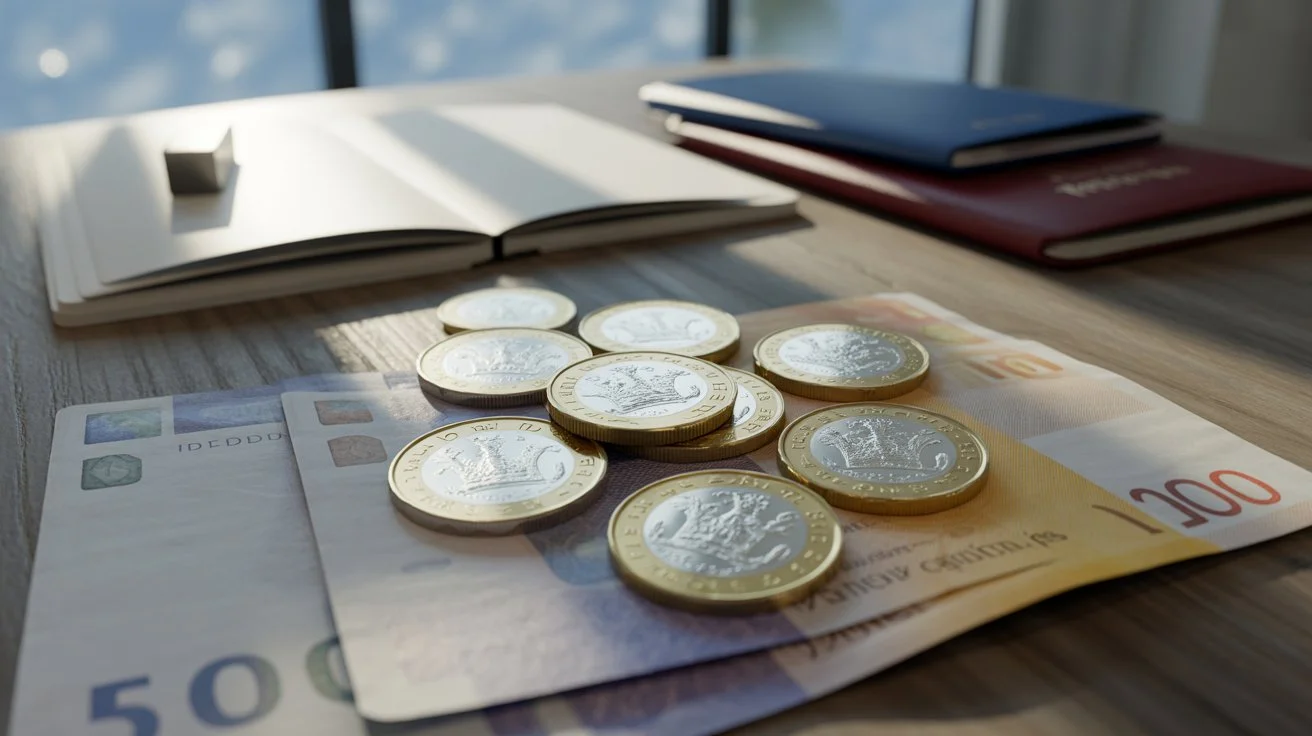
You’ve seen the word kroner on a travel blog, a currency converter, or maybe a Scandinavian TV show. But what does it actually mean? And why does it matter to you as an American?
The word “kroner” is the plural of krone — the official currency of Denmark and Norway. It literally translates to “crowns” in English. From its royal roots to its modern role in global economics, this guide covers everything — definition, pronunciation, history, types, exchange rates, slang, and more.
Quick Answer: Kroner means “crowns” in Danish and Norwegian. It is the plural form of krone — the basic monetary unit of Denmark (DKK) and Norway (NOK). The word comes from the Latin “corona,” meaning crown.
What Is Kroner? Definition, Pronunciation & Basic Meaning
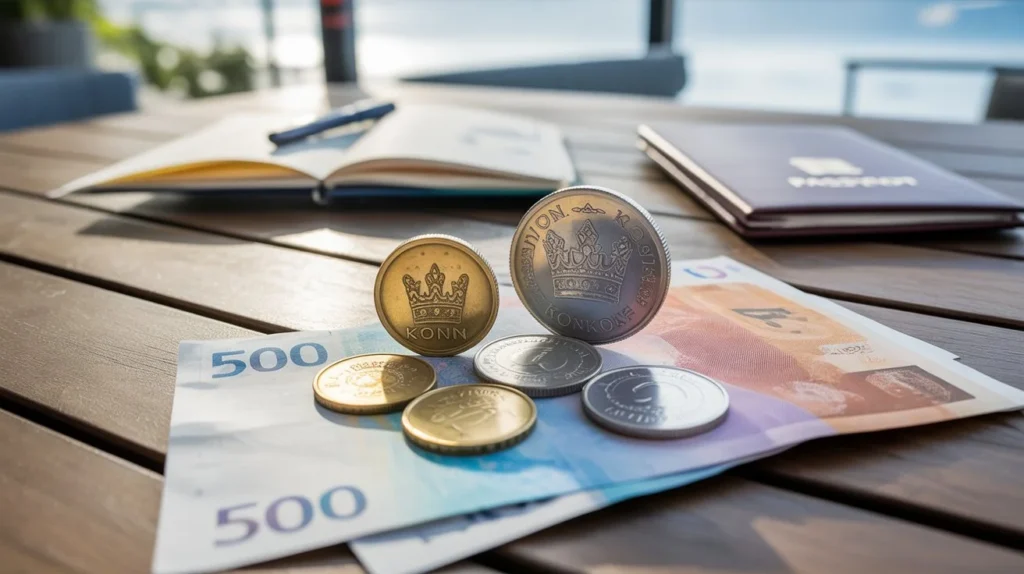
Let’s start with the basics. Before anything else, you need a clear definition.
Kroner Definition — What the Word Actually Means
Kroner is a noun. It is the plural form of krone — the basic unit of money in Denmark and Norway. According to Merriam-Webster, the first known English use of “krone” dates to 1885. The Online Etymology Dictionary (Etymonline) traces it even earlier, to 1861 — derived from the Scandinavian root meaning “crown.”
In dictionary terms, VocabClass defines kroner as “the basic unit of money in Norway and Denmark.” The Collins Dictionary confirms the same. Both sources agree: kroner is money, and its name carries a royal meaning.
Singular vs. Plural — Krone, Kroner, Krona, Kronor Explained
This is where most people get confused. Here is a clean breakdown:
| Term | Country | Language | Form | ISO Code |
| Krone | Denmark | Danish | Singular | DKK |
| Kroner | Denmark / Norway | Danish / Norwegian | Plural | DKK / NOK |
| Krone | Norway | Norwegian | Singular | NOK |
| Krona | Sweden | Swedish | Singular | SEK |
| Kronor | Sweden | Swedish | Plural | SEK |
| Króna | Iceland | Icelandic | Singular | ISK |
| Krónur | Iceland | Icelandic | Plural | ISK |
| Króna | Faroe Islands | Faroese | Singular | — |
Key rule: “Kroner” is specifically Danish and Norwegian plural. “Kronor” is Swedish plural. They share the same root but are NOT interchangeable currencies.
How to Pronounce Kroner Correctly
The correct pronunciation is KROH-ner (two syllables). The stress falls on the first syllable. In IPA notation: /ˈkroʊnər/. Most American speakers say it correctly on the first try — it rhymes with “owner” and “loner.”
Kroner Meaning in English — How Americans Understand It
For most Americans, kroner in English simply means foreign currency — specifically the money used in Scandinavia. You’ll encounter it when planning a trip to Copenhagen or Oslo, reading about Norwegian oil funds, or watching a Nordic crime drama on Netflix.
Beyond the literal meaning, the word carries a cultural signal. It suggests high living standards, social welfare, and economic stability — all things Scandinavian countries are known for.
What Does Kroner Mean in German?
In German, the equivalent word is Krone (plural: Kronen). It carries the same root meaning — “crown.” Importantly, Austria used the Krone (Austrian Krone) as its official currency from 1892 to 1925. According to Merriam-Webster, one Austrian krone was worth 100 heller. So in German, “kroner” (or “kronen”) refers to the old Austrian crown currency — not the Scandinavian one.
What Does “Kroner” Mean in Swedish?
In Swedish, the word is krona (singular) and kronor (plural) — not “kroner.” The Swedish krona (SEK) is a completely separate currency from the Danish and Norwegian krone. Saying “kroner” to a Swede will be understood, but the technically correct term is “kronor.” The meaning, however, is identical: crowns.
Etymology & Origin — Why Is It Called Kroner?
The name “kroner” is not random. It was chosen deliberately — and it tells a powerful story about monarchy, identity, and economic cooperation.
The Latin Root — From “Corona” to “Crown” to “Kroner”
The word traces back to Latin: “corona” — meaning crown. From Latin, it moved into Old French as “corone,” then into Scandinavian languages as “krone.” The Etymonline dictionary confirms: krone entered English in 1861 as a “currency unit and silver coin in Scandinavian countries,” literally meaning “crown.”
Coins in Europe were historically named for the images stamped on them. Crowns were stamped on these coins — so they became the crown.
Royal Symbolism — Why Scandinavian Nations Named Their Currency After a Crown
In pre-Christian Europe and through the medieval period, the crown symbolized divine authority, sacred kingship, and legitimacy. When Scandinavian nations adopted modern currencies, naming them “krone” was a direct statement: this currency is backed by the authority of the monarchy.
Even today, Danish coins feature the monogram of King Frederik X (replacing Queen Margrethe II’s monogram in 2024). The 50-øre coin bears the Crown of Christian V. The crown is not just a name — it is physically present on every coin.
The Scandinavian Monetary Union (1873–1914) — The Birth of the Modern Kroner
In 1873, Denmark and Sweden formed the Scandinavian Monetary Union. Norway joined in 1875. All three countries adopted a shared gold-standard currency system under the krone/krona name.
The modern Danish krone was officially introduced on January 1, 1875, replacing the Danish rigsdaler at a rate of 2 kroner = 1 rigsdaler. This placed the krone on the gold standard at 2,480 kroner per kilogram of fine gold.
World War I ended the union in practice. But the name survived — in each country independently. That is why today, Denmark, Norway, and Sweden all use “krone/krona” but with fully separate values and management.
From Harald Bluetooth to King Frederik X — A Thousand Years of Danish Coinage
Denmark’s coin history stretches back over 1,000 years. The oldest known Danish coin was struck in AD 825–840. The earliest systematic minting was introduced by Harald Bluetooth in the late 10th century. Later, Canute the Great expanded organized minting in the 1020s.
The word “krone” itself existed as early as 1513 — as a unit of account worth 8 marks. Denmark has continuously refined its coinage system over the centuries, most recently issuing a new series in 2009 (the “Bridge” series) featuring Danish bridges and prehistoric artifacts.
Historical Timeline: 1513 — Krone appears as unit of account → 1861 — First English-language use recorded → 1873 — Scandinavian Monetary Union formed → 1875 — Modern krone officially introduced → 1914 — Union dissolves after WWI → 2000 — Denmark votes to keep krone (rejected euro 53.2% to 46.8%) → 2026 — Krone remains strong, independent, and widely trusted.
Types of Kroner — The Complete Country-by-Country Currency Guide
Are there different types of kroner? Yes — and this is one of the most misunderstood facts about the word. There is not one single “kroner.” There are multiple distinct currencies that share this name or a close variation of it.
Danish Krone (DKK) — The Most Recognized Kroner in the World
The Danish krone (DKK) is the official currency of the Kingdom of Denmark — including mainland Denmark, Greenland, and the Faroe Islands.
One krone is subdivided into 100 øre (the name øre is likely derived from Latin for “gold”). Current banknotes come in 50, 100, 200, and 500 kroner denominations. The 1,000-krone banknote was phased out by May 31, 2025 to combat money laundering.
The DKK is managed by Danmarks Nationalbank and is pegged to the euro via the European Exchange Rate Mechanism (ERM II) at a rate of approximately 7.46038 kr. per euro with a narrow 2.25% fluctuation band. This makes the DKK one of the most stable currencies in the world.
Norwegian Krone (NOK) — The Oil-Backed Nordic Currency
The Norwegian krone (NOK) is a floating currency — meaning its value moves with global market forces. Norway is not an EU member, so it was never part of ERM II debates.
The NOK is heavily influenced by Norway’s oil and gas exports. When oil prices rise, the krone typically strengthens. Norway’s Government Pension Fund Global — the world’s largest sovereign wealth fund — is denominated in NOK.
Swedish Krona (SEK) — Same Crown, Different Name
Sweden uses the krona (SEK) — not “krone.” The plural in Swedish is kronor. Sweden is an EU member but has not adopted the euro. Like Denmark, Sweden chose to retain its national currency as a matter of economic sovereignty and cultural identity.
Icelandic Króna (ISK) — The Smallest and Most Volatile
Iceland’s currency is the króna (ISK), plural krónur. Iceland has a smaller economy, making the ISK more volatile than DKK or NOK. One US dollar is worth significantly more ISK than DKK or NOK — making Iceland appear expensive to American visitors.
Faroese Króna — Denmark’s Dependent Territory Currency
The Faroe Islands use the Faroese króna — a localized version of the Danish krone, pegged at par (1:1). The Faroe Islands use Danish coins but issue their own distinct banknotes, first introduced in the 1950s.
The Austrian Krone (1892–1925) — The Historical Outlier
This is what most blogs miss entirely. The Austrian Krone was the official currency of Austria-Hungary from 1892 to 1925. Its plural in German is Kronen. Merriam-Webster lists this as the second definition of “krone” — a separate entry from the Scandinavian version. If you encounter “kroner” in a German-language historical context, it often refers to this defunct currency.
| Currency | Country | Code | Subunit | Peg / Float | Stability |
| Danish Krone | Denmark / Greenland / Faroe Is. | DKK | 100 øre | Pegged to EUR (ERM II) | Very High |
| Norwegian Krone | Norway | NOK | 100 øre | Floating | High (oil-linked) |
| Swedish Krona | Sweden | SEK | 100 öre | Floating | High |
| Icelandic Króna | Iceland | ISK | 100 aurar | Floating | Moderate |
| Faroese Króna | Faroe Islands | — | 100 oyggjar | Pegged to DKK (1:1) | Very High |
| Austrian Krone | Austria-Hungary (historical) | — | 100 heller | Gold standard (defunct) | Historical |
Kroner Exchange Rates, Value & Practical Usage in 2026
This section is for Americans who actually need to use kroner — travelers, investors, and anyone wiring money to Scandinavia.
How Much Is a Kroner Worth in US Dollars? (2026 Rates)
Exchange rates shift daily, but here are approximate early-2026 baseline figures to give you a realistic picture:
| Currency Pair | Approx. Rate (Early 2026) | What This Means |
| 1 USD → DKK (Danish Krone) | ~6.90 DKK | Every dollar buys ~7 Danish kroner |
| 1 USD → NOK (Norwegian Krone) | ~10.0 NOK | Norway feels pricier in USD terms |
| 1 USD → SEK (Swedish Krona) | ~10.5 SEK | Sweden comparable to Norway |
| 1 USD → ISK (Icelandic Króna) | ~138 ISK | Iceland has high nominal krona amounts |
| 1 EUR → DKK | ~7.46 DKK | DKK pegged tightly to euro |
Always verify current rates on XE.com or Wise.com before traveling or exchanging. Rates at airport kiosks are almost always worse.
Why the Danish Krone (DKK) Is Pegged to the Euro via ERM II
Denmark is a member of the European Union but voted against adopting the euro in 2000 — with 53.2% of Danes voting to keep their krone. Despite this, the DKK is pegged to the euro through the EU’s Exchange Rate Mechanism (ERM II) at approximately 7.46 DKK per euro, within a ±2.25% band.
This means the DKK behaves almost like the euro in terms of stability — but Denmark retains full monetary sovereignty and national identity.
Norwegian Krone vs. Swedish Krona — Which Is Stronger in 2026?
In 2025, the US dollar fell 7% against the Norwegian krone and 9% against the Swedish krona, according to data cited by Forbes. This means Americans traveling to Norway or Sweden in 2026 are paying more in USD terms than in prior years — so budgeting carefully matters.
Best Ways for Americans to Exchange Kroner
- Use Wise or OFX — they offer mid-market rates with low fees
- Check your US bank’s international ATM network before departing
- Avoid airport and hotel exchange kiosks — markups can reach 10–15%
- Monitor rates on XE Currency Converter weeks before your trip
- Check nationalbanken.dk (Danmarks Nationalbank’s official site) for DKK official data
Cash vs. Digital Payments in Scandinavia — What American Travelers Must Know
Scandinavia is among the most cashless regions in the world. In Denmark and Norway, most transactions happen via contactless card or mobile payment apps. You can go days in Copenhagen or Oslo without touching a banknote.
That said, carrying a small amount of physical kroner is still wise for rural areas, small cafes, and ferry connections. In Iceland, card acceptance is near-universal even in remote areas.
Kroner in American Culture — Slang, Media & Scandinavian Heritage
This is the section no purely financial blog covers — and it matters for understanding how Americans actually encounter and use the word “kroner.”
Kroner as Slang — How Gen Z and Millennials Use It to Mean “Big Money”
According to Slang.org, “kroner” has developed a second life as internet slang — a figurative, often ironic reference to large sums of money or excessive spending. Think of it as the Scandinavian equivalent of “big bucks” — used humorously.
Common usage examples found online:
- “Dude just dropped heavy kroner on overpriced cold brew.”
- “She claims to be rolling in kroner, but she Venmoed me for pizza.”
- “That coffee cost 50 kroner — it better be brewed by a Norse god.”
This slang usage is especially common among millennials and Gen Z urban dwellers who use it to mock conspicuous consumption — someone spending absurd amounts on artisanal food, overpriced experiences, or status symbols.
Kroner in Scandinavian-American Heritage — Minnesota, the Midwest & Nordic Pride
The United States has deep Scandinavian roots. Minnesota, Wisconsin, and the broader Midwest have significant Norwegian-American and Danish-American communities. For these families, the word “kroner” is not just economics — it connects to ancestry, folk traditions, Lutheran church history, and family migration stories.
At Nordic heritage festivals, genealogy research events, and cultural celebrations, kroner carries emotional and identity-based weight far beyond its face value.
Kroner in TV, Film & Media — Where Americans Encounter the Word
Americans regularly encounter “kroner” through popular culture:
- Scandinavian crime dramas (“Nordic Noir”) like The Bridge and Borgen
- Travel shows featuring Norway’s fjords, Copenhagen’s food scene, or Iceland’s landscapes
- Business news covering Norwegian oil fund performance and DKK/USD rates
- Study-abroad budgeting guides for students attending Scandinavian universities
The Psychological Weight of Kroner — What Scandinavian Currency Signals to Americans
Scandinavian countries consistently rank at the top of global happiness indexes, human development reports, and quality-of-life surveys. As a result, their currency — the kroner — has come to subconsciously signal:
- Economic stability and social trust
- Strong welfare systems and public services
- Environmental responsibility and clean living
- A slower, more balanced pace of life (hygge)
Money reflects the culture that uses it. Kroner carries the reputation of the nations behind it.
Frequently Asked Questions About Kroner
What is the meaning of kroner?
Kroner is the plural form of krone — the official currency of Denmark (DKK) and Norway (NOK). The word literally means “crowns” in Danish and Norwegian. It derives from the Latin “corona”, meaning crown, reflecting its historical ties to Scandinavian monarchy and royal authority.
What is kroner in English?
In English, kroner means “crowns” — and refers specifically to the plural monetary units of Denmark and Norway. English speakers use it when discussing Scandinavian exchange rates, travel budgets, or foreign currency. It entered English usage around 1861–1885, according to Etymonline and Merriam-Webster.
What does kroner mean in German?
In German, the equivalent is Krone (plural: Kronen). This refers primarily to the Austrian Krone — Austria-Hungary’s currency from 1892 to 1925. One Austrian krone was subdivided into 100 heller. The German “Kronen” and the Danish/Norwegian “kroner” share the same Latin root but are entirely separate historical currencies.
Why is it called kroner?
It is called kroner because the word means “crowns” — a direct reference to the royal crown symbolism of Scandinavian monarchies. When Denmark and Norway adopted their modern currencies in 1875, naming them after the crown reinforced national sovereignty, monarchical legitimacy, and economic authority. Coins were also physically stamped with crown imagery — hence the name.
What does “kroner” mean in Swedish?
In Swedish, the word is not “kroner” — it is “kronor” (plural of “krona”). The meaning is the same: crowns. The Swedish krona (SEK) is a separate currency from the Danish and Norwegian krone. All three share the same etymological root but operate independently with different market values.
Are there different types of kroner?
Yes — there are multiple distinct currencies that use the “krone/kroner” name or a close variation. These include the Danish Krone (DKK), Norwegian Krone (NOK), Swedish Krona (SEK), Icelandic Króna (ISK), Faroese Króna, and the historical Austrian Krone (1892–1925). Each is managed independently and has its own value. They are not interchangeable.
Kroner Meaning Explained: Full Guide to Currency (2026)
You’ve seen the word kroner on a travel blog, a currency converter, or maybe a Scandinavian TV show. But what does it actually mean? And why does it matter to you as an American?
The word “kroner” is the plural of krone — the official currency of Denmark and Norway. It literally translates to “crowns” in English. From its royal roots to its modern role in global economics, this guide covers everything — definition, pronunciation, history, types, exchange rates, slang, and more.
Quick Answer: Kroner means “crowns” in Danish and Norwegian. It is the plural form of krone — the basic monetary unit of Denmark (DKK) and Norway (NOK). The word comes from the Latin “corona,” meaning crown.
What Is Kroner? Definition, Pronunciation & Basic Meaning
Let’s start with the basics. Before anything else, you need a clear definition.
Kroner Definition — What the Word Actually Means
Kroner is a noun. It is the plural form of krone — the basic unit of money in Denmark and Norway. According to Merriam-Webster, the first known English use of “krone” dates to 1885. The Online Etymology Dictionary (Etymonline) traces it even earlier, to 1861 — derived from the Scandinavian root meaning “crown.”
In dictionary terms, VocabClass defines kroner as “the basic unit of money in Norway and Denmark.” The Collins Dictionary confirms the same. Both sources agree: kroner is money, and its name carries a royal meaning.
Singular vs. Plural — Krone, Kroner, Krona, Kronor Explained
This is where most people get confused. Here is a clean breakdown:
| Term | Country | Language | Form | ISO Code |
| Krone | Denmark | Danish | Singular | DKK |
| Kroner | Denmark / Norway | Danish / Norwegian | Plural | DKK / NOK |
| Krone | Norway | Norwegian | Singular | NOK |
| Krona | Sweden | Swedish | Singular | SEK |
| Kronor | Sweden | Swedish | Plural | SEK |
| Króna | Iceland | Icelandic | Singular | ISK |
| Krónur | Iceland | Icelandic | Plural | ISK |
| Króna | Faroe Islands | Faroese | Singular | — |
Key rule: “Kroner” is specifically Danish and Norwegian plural. “Kronor” is Swedish plural. They share the same root but are NOT interchangeable currencies.
How to Pronounce Kroner Correctly
The correct pronunciation is KROH-ner (two syllables). The stress falls on the first syllable. In IPA notation: /ˈkroʊnər/. Most American speakers say it correctly on the first try — it rhymes with “owner” and “loner.”
Kroner Meaning in English — How Americans Understand It
For most Americans, kroner in English simply means foreign currency — specifically the money used in Scandinavia. You’ll encounter it when planning a trip to Copenhagen or Oslo, reading about Norwegian oil funds, or watching a Nordic crime drama on Netflix.
Beyond the literal meaning, the word carries a cultural signal. It suggests high living standards, social welfare, and economic stability — all things Scandinavian countries are known for.
What Does Kroner Mean in German?
In German, the equivalent word is Krone (plural: Kronen). It carries the same root meaning — “crown.” Importantly, Austria used the Krone (Austrian Krone) as its official currency from 1892 to 1925. According to Merriam-Webster, one Austrian krone was worth 100 heller. So in German, “kroner” (or “kronen”) refers to the old Austrian crown currency — not the Scandinavian one.
What Does “Kroner” Mean in Swedish?
In Swedish, the word is krona (singular) and kronor (plural) — not “kroner.” The Swedish krona (SEK) is a completely separate currency from the Danish and Norwegian krone. Saying “kroner” to a Swede will be understood, but the technically correct term is “kronor.” The meaning, however, is identical: crowns.
Etymology & Origin — Why Is It Called Kroner?
The name “kroner” is not random. It was chosen deliberately — and it tells a powerful story about monarchy, identity, and economic cooperation.
The Latin Root — From “Corona” to “Crown” to “Kroner”
The word traces back to Latin: “corona” — meaning crown. From Latin, it moved into Old French as “corone,” then into Scandinavian languages as “krone.” The Etymonline dictionary confirms: krone entered English in 1861 as a “currency unit and silver coin in Scandinavian countries,” literally meaning “crown.”
Coins in Europe were historically named for the images stamped on them. Crowns were stamped on these coins — so they became the crown.
Royal Symbolism — Why Scandinavian Nations Named Their Currency After a Crown
In pre-Christian Europe and through the medieval period, the crown symbolized divine authority, sacred kingship, and legitimacy. When Scandinavian nations adopted modern currencies, naming them “krone” was a direct statement: this currency is backed by the authority of the monarchy.
Even today, Danish coins feature the monogram of King Frederik X (replacing Queen Margrethe II’s monogram in 2024). The 50-øre coin bears the Crown of Christian V. The crown is not just a name — it is physically present on every coin.
The Scandinavian Monetary Union (1873–1914) — The Birth of the Modern Kroner
In 1873, Denmark and Sweden formed the Scandinavian Monetary Union. Norway joined in 1875. All three countries adopted a shared gold-standard currency system under the krone/krona name.
The modern Danish krone was officially introduced on January 1, 1875, replacing the Danish rigsdaler at a rate of 2 kroner = 1 rigsdaler. This placed the krone on the gold standard at 2,480 kroner per kilogram of fine gold.
World War I ended the union in practice. But the name survived — in each country independently. That is why today, Denmark, Norway, and Sweden all use “krone/krona” but with fully separate values and management.
From Harald Bluetooth to King Frederik X — A Thousand Years of Danish Coinage
Denmark’s coin history stretches back over 1,000 years. The oldest known Danish coin was struck in AD 825–840. The earliest systematic minting was introduced by Harald Bluetooth in the late 10th century. Later, Canute the Great expanded organized minting in the 1020s.
The word “krone” itself existed as early as 1513 — as a unit of account worth 8 marks. Denmark has continuously refined its coinage system over the centuries, most recently issuing a new series in 2009 (the “Bridge” series) featuring Danish bridges and prehistoric artifacts.
Historical Timeline: 1513 — Krone appears as unit of account → 1861 — First English-language use recorded → 1873 — Scandinavian Monetary Union formed → 1875 — Modern krone officially introduced → 1914 — Union dissolves after WWI → 2000 — Denmark votes to keep krone (rejected euro 53.2% to 46.8%) → 2026 — Krone remains strong, independent, and widely trusted.
Types of Kroner — The Complete Country-by-Country Currency Guide
Are there different types of kroner? Yes — and this is one of the most misunderstood facts about the word. There is not one single “kroner.” There are multiple distinct currencies that share this name or a close variation of it.
Danish Krone (DKK) — The Most Recognized Kroner in the World
The Danish krone (DKK) is the official currency of the Kingdom of Denmark — including mainland Denmark, Greenland, and the Faroe Islands.
One krone is subdivided into 100 øre (the name øre is likely derived from Latin for “gold”). Current banknotes come in 50, 100, 200, and 500 kroner denominations. The 1,000-krone banknote was phased out by May 31, 2025 to combat money laundering.
The DKK is managed by Danmarks Nationalbank and is pegged to the euro via the European Exchange Rate Mechanism (ERM II) at a rate of approximately 7.46038 kr. per euro with a narrow 2.25% fluctuation band. This makes the DKK one of the most stable currencies in the world.
Norwegian Krone (NOK) — The Oil-Backed Nordic Currency
The Norwegian krone (NOK) is a floating currency — meaning its value moves with global market forces. Norway is not an EU member, so it was never part of ERM II debates.
The NOK is heavily influenced by Norway’s oil and gas exports. When oil prices rise, the krone typically strengthens. Norway’s Government Pension Fund Global — the world’s largest sovereign wealth fund — is denominated in NOK.
Swedish Krona (SEK) — Same Crown, Different Name
Sweden uses the krona (SEK) — not “krone.” The plural in Swedish is kronor. Sweden is an EU member but has not adopted the euro. Like Denmark, Sweden chose to retain its national currency as a matter of economic sovereignty and cultural identity.
Icelandic Króna (ISK) — The Smallest and Most Volatile
Iceland’s currency is the króna (ISK), plural krónur. Iceland has a smaller economy, making the ISK more volatile than DKK or NOK. One US dollar is worth significantly more ISK than DKK or NOK — making Iceland appear expensive to American visitors.
Faroese Króna — Denmark’s Dependent Territory Currency
The Faroe Islands use the Faroese króna — a localized version of the Danish krone, pegged at par (1:1). The Faroe Islands use Danish coins but issue their own distinct banknotes, first introduced in the 1950s.
The Austrian Krone (1892–1925) — The Historical Outlier
This is what most blogs miss entirely. The Austrian Krone was the official currency of Austria-Hungary from 1892 to 1925. Its plural in German is Kronen. Merriam-Webster lists this as the second definition of “krone” — a separate entry from the Scandinavian version. If you encounter “kroner” in a German-language historical context, it often refers to this defunct currency.
| Currency | Country | Code | Subunit | Peg / Float | Stability |
| Danish Krone | Denmark / Greenland / Faroe Is. | DKK | 100 øre | Pegged to EUR (ERM II) | Very High |
| Norwegian Krone | Norway | NOK | 100 øre | Floating | High (oil-linked) |
| Swedish Krona | Sweden | SEK | 100 öre | Floating | High |
| Icelandic Króna | Iceland | ISK | 100 aurar | Floating | Moderate |
| Faroese Króna | Faroe Islands | — | 100 oyggjar | Pegged to DKK (1:1) | Very High |
| Austrian Krone | Austria-Hungary (historical) | — | 100 heller | Gold standard (defunct) | Historical |
Kroner Exchange Rates, Value & Practical Usage in 2026
This section is for Americans who actually need to use kroner — travelers, investors, and anyone wiring money to Scandinavia.
How Much Is a Kroner Worth in US Dollars? (2026 Rates)
Exchange rates shift daily, but here are approximate early-2026 baseline figures to give you a realistic picture:
| Currency Pair | Approx. Rate (Early 2026) | What This Means |
| 1 USD → DKK (Danish Krone) | ~6.90 DKK | Every dollar buys ~7 Danish kroner |
| 1 USD → NOK (Norwegian Krone) | ~10.0 NOK | Norway feels pricier in USD terms |
| 1 USD → SEK (Swedish Krona) | ~10.5 SEK | Sweden comparable to Norway |
| 1 USD → ISK (Icelandic Króna) | ~138 ISK | Iceland has high nominal krona amounts |
| 1 EUR → DKK | ~7.46 DKK | DKK pegged tightly to euro |
Always verify current rates on XE.com or Wise.com before traveling or exchanging. Rates at airport kiosks are almost always worse.
Why the Danish Krone (DKK) Is Pegged to the Euro via ERM II
Denmark is a member of the European Union but voted against adopting the euro in 2000 — with 53.2% of Danes voting to keep their krone. Despite this, the DKK is pegged to the euro through the EU’s Exchange Rate Mechanism (ERM II) at approximately 7.46 DKK per euro, within a ±2.25% band.
This means the DKK behaves almost like the euro in terms of stability — but Denmark retains full monetary sovereignty and national identity.
Norwegian Krone vs. Swedish Krona — Which Is Stronger in 2026?
In 2025, the US dollar fell 7% against the Norwegian krone and 9% against the Swedish krona, according to data cited by Forbes. This means Americans traveling to Norway or Sweden in 2026 are paying more in USD terms than in prior years — so budgeting carefully matters.
Best Ways for Americans to Exchange Kroner
- Use Wise or OFX — they offer mid-market rates with low fees
- Check your US bank’s international ATM network before departing
- Avoid airport and hotel exchange kiosks — markups can reach 10–15%
- Monitor rates on XE Currency Converter weeks before your trip
- Check nationalbanken.dk (Danmarks Nationalbank’s official site) for DKK official data
Cash vs. Digital Payments in Scandinavia — What American Travelers Must Know
Scandinavia is among the most cashless regions in the world. In Denmark and Norway, most transactions happen via contactless card or mobile payment apps. You can go days in Copenhagen or Oslo without touching a banknote.
That said, carrying a small amount of physical kroner is still wise for rural areas, small cafes, and ferry connections. In Iceland, card acceptance is near-universal even in remote areas.
Kroner in American Culture — Slang, Media & Scandinavian Heritage
This is the section no purely financial blog covers — and it matters for understanding how Americans actually encounter and use the word “kroner.”
Kroner as Slang — How Gen Z and Millennials Use It to Mean “Big Money”
According to Slang.org, “kroner” has developed a second life as internet slang — a figurative, often ironic reference to large sums of money or excessive spending. Think of it as the Scandinavian equivalent of “big bucks” — used humorously.
Common usage examples found online:
- “Dude just dropped heavy kroner on overpriced cold brew.”
- “She claims to be rolling in kroner, but she Venmoed me for pizza.”
- “That coffee cost 50 kroner — it better be brewed by a Norse god.”
This slang usage is especially common among millennials and Gen Z urban dwellers who use it to mock conspicuous consumption — someone spending absurd amounts on artisanal food, overpriced experiences, or status symbols.
Kroner in Scandinavian-American Heritage — Minnesota, the Midwest & Nordic Pride
The United States has deep Scandinavian roots. Minnesota, Wisconsin, and the broader Midwest have significant Norwegian-American and Danish-American communities. For these families, the word “kroner” is not just economics — it connects to ancestry, folk traditions, Lutheran church history, and family migration stories.
At Nordic heritage festivals, genealogy research events, and cultural celebrations, kroner carries emotional and identity-based weight far beyond its face value.
Kroner in TV, Film & Media — Where Americans Encounter the Word
Americans regularly encounter “kroner” through popular culture:
- Scandinavian crime dramas (“Nordic Noir”) like The Bridge and Borgen
- Travel shows featuring Norway’s fjords, Copenhagen’s food scene, or Iceland’s landscapes
- Business news covering Norwegian oil fund performance and DKK/USD rates
- Study-abroad budgeting guides for students attending Scandinavian universities
The Psychological Weight of Kroner — What Scandinavian Currency Signals to Americans
Scandinavian countries consistently rank at the top of global happiness indexes, human development reports, and quality-of-life surveys. As a result, their currency — the kroner — has come to subconsciously signal:
- Economic stability and social trust
- Strong welfare systems and public services
- Environmental responsibility and clean living
- A slower, more balanced pace of life (hygge)
Money reflects the culture that uses it. Kroner carries the reputation of the nations behind it.
Frequently Asked Questions About Kroner
What is the meaning of kroner?
Kroner is the plural form of krone — the official currency of Denmark (DKK) and Norway (NOK). The word literally means “crowns” in Danish and Norwegian. It derives from the Latin “corona”, meaning crown, reflecting its historical ties to Scandinavian monarchy and royal authority.
What is kroner in English?
In English, kroner means “crowns” — and refers specifically to the plural monetary units of Denmark and Norway. English speakers use it when discussing Scandinavian exchange rates, travel budgets, or foreign currency. It entered English usage around 1861–1885, according to Etymonline and Merriam-Webster.
What does kroner mean in German?
In German, the equivalent is Krone (plural: Kronen). This refers primarily to the Austrian Krone — Austria-Hungary’s currency from 1892 to 1925. One Austrian krone was subdivided into 100 heller. The German “Kronen” and the Danish/Norwegian “kroner” share the same Latin root but are entirely separate historical currencies.
Why is it called kroner?
It is called kroner because the word means “crowns” — a direct reference to the royal crown symbolism of Scandinavian monarchies. When Denmark and Norway adopted their modern currencies in 1875, naming them after the crown reinforced national sovereignty, monarchical legitimacy, and economic authority. Coins were also physically stamped with crown imagery — hence the name.
What does “kroner” mean in Swedish?
In Swedish, the word is not “kroner” — it is “kronor” (plural of “krona”). The meaning is the same: crowns. The Swedish krona (SEK) is a separate currency from the Danish and Norwegian krone. All three share the same etymological root but operate independently with different market values.
Are there different types of kroner?
Yes — there are multiple distinct currencies that use the “krone/kroner” name or a close variation. These include the Danish Krone (DKK), Norwegian Krone (NOK), Swedish Krona (SEK), Icelandic Króna (ISK), Faroese Króna, and the historical Austrian Krone (1892–1925). Each is managed independently and has its own value. They are not interchangeable.
Final Thoughts
The word kroner is far more than a line on a currency converter. It carries over a thousand years of royal history, monetary evolution, and cultural identity. From the Scandinavian Monetary Union of 1873 to the ERM II peg of 2026, from Harald Bluetooth’s coins to King Frederik X’s monogram, kroner has always been more than money.
The word kroner is far more than a line on a currency converter. It carries over a thousand years of royal history, monetary evolution, and cultural identity. From the Scandinavian Monetary Union of 1873 to the ERM II peg of 2026, from Harald Bluetooth’s coins to King Frederik X’s monogram, kroner has always been more than money.