There are songs that play in the background. Then there are songs that stop you mid-scroll and make you feel something real. Counting My Blessings by Seph Schlueter is the second kind.
Released on July 28, 2023, this contemporary Christian worship song hit listeners in a way few songs do — quietly, deeply, and without warning.
What Is “Counting My Blessings” & Who Is Seph Schlueter?
Seph Schlueter is a Nashville-based Christian singer-songwriter known for writing music that feels honest rather than polished for performance. He doesn’t just write worship songs — he writes moments.
“Counting My Blessings” was released as a single in July 2023. The song was co-written by Seph Schlueter, Jordan Sapp, and Jonathan Gamble — three writers with deep roots in the CCM (Contemporary Christian Music) world.
Jordan Sapp is a well-known name in Christian music circles, having contributed to multiple chart-topping worship tracks. Jonathan Gamble brings a lyrical sensitivity that helps ground big theological ideas in everyday language.
The song also has an acoustic version, featured on Musixmatch, which strips away production layers and lets the raw emotion of the lyric breathe even more openly. Many listeners actually prefer the acoustic version for personal devotion and quiet reflection.
Must visit: Happy Tuesday Blessings: Powerful Quotes
What makes Seph Schlueter different from most CCM artists?
He writes from personal experience. The song opens with a line about once praying for a miracle while being too scared to hope — and that kind of honesty is rare in worship music. It doesn’t start from triumph. It starts from a very human place of fear.
According to data from Spotify and Apple Music, songs that combine personal vulnerability with theological depth consistently outperform generic praise tracks in listener retention and playlist saves. “Counting My Blessings” is a textbook example of why.
Counting My Blessings Lyrics — Full Song Words & Verse-by-Verse Breakdown
Rather than presenting the lyrics as a passive reading experience, let’s walk through what each section actually says — and why it matters.
What does the opening verse of “Counting My Blessings” talk about?
The opening verse takes the listener back to a moment of crisis. Seph describes what it felt like to be praying for a miracle while barely daring to hope. This is the setup — the before picture. He’s not starting from praise. He’s starting from the pit.
This is a deliberate lyrical choice. By anchoring the song in a moment of real struggle, the gratitude that follows feels earned rather than performed.
“God, I’m still counting my blessings — all that You’ve done in my life. The more that I look in the details, the more of Your goodness I find.”
What does the chorus of “Counting My Blessings” mean?
The chorus is the emotional and theological center of the entire song. The line about looking into the details is particularly powerful — it’s not just about big answered prayers. It’s about learning to notice God’s fingerprints in the small, ordinary moments of daily life.
The phrase “on this side of heaven” is theologically loaded. It acknowledges that our human capacity to comprehend God’s goodness is limited by our mortality. We will run out of time before we run out of reasons to be grateful.
“Father, on this side of heaven, I know that I’ll run out of time — but I will keep counting my blessings, knowing I can’t count that high.”
What is the bridge of the song saying?
The bridge introduces the idea of seasons. Life changes. Hard seasons come. But the songwriter’s response is not to wait for better circumstances before being grateful — it’s to remember God’s faithfulness during the difficult ones.
This connects directly to Lamentations 3:22-23, which reminds us that God’s mercies are new every morning. The bridge doesn’t dismiss suffering. It places it inside a larger story of faithfulness.
“God, I will remember all of the reasons my heart has to be grateful — all the times You have been faithful to me.”
Meaning & Inspiration Behind Counting My Blessings
What is the deeper meaning of “Counting My Blessings” by Seph Schlueter?
At its core, this song is about the spiritual discipline of gratitude. Not the surface-level “count your blessings” advice you’d find on a motivational poster — but the deep, intentional practice of remembering what God has done.
Psalm 77:11 commands us to remember the deeds of the Lord and meditate on His works. That’s the exact posture this song takes. Seph isn’t just feeling good and singing about it. He’s actively looking back and cataloging grace.
Psalm 40:5 says God’s wonders are too many to declare — and the song captures this truth brilliantly. The lyric about counting from one to infinity before running out of thanks is not just poetic. It reflects a biblical reality about the nature of divine generosity.
Why does the song resonate with people going through hard times?
Because it doesn’t pretend hard times don’t exist. The song is written from the other side of a difficult season, looking back with clearer eyes. That vantage point — retrospective gratitude — is something almost every adult listener has experienced.
Research in positive psychology (University of California, Davis, Dr. Robert Emmons) consistently shows that deliberate gratitude practices reduce anxiety, increase resilience, and improve overall mental well-being. This song is essentially a worship-music version of that practice.
Pastor Mike Jr. also recorded a version of “Counting My Blessings,” which introduced the song to a broader gospel and Black church audience. His version carries a slightly different emotional energy — more celebratory, rooted in the gospel music tradition — but delivers the same core message.
“The more I look into the details of my life, the more proof I find that God has been working all along — even in the moments I thought He was silent.”
Emotional Breakdown — Why This Song Hits So Deep
This is what competitors missed entirely — and it’s what makes this song genuinely special.
Why do people cry when they hear “Counting My Blessings”?
Because the song follows the exact emotional arc that mirrors real human experience. It moves through:
Fear → Reflection → Gratitude → Surrender
That’s not just a song structure. That’s how grief and healing actually work. That’s how answered prayers feel when you finally look back at them.
The line about being scared to hope is what unlocks the emotion for most listeners. Hope is risky. When you’ve been hurt or disappointed by life, hoping again feels dangerous. Seph names that fear instead of skipping over it — and that honesty creates an immediate emotional connection.
Why does this song work so well in American Christian culture specifically?
The USA has one of the highest rates of anxiety and depression in the developed world. According to the National Institute of Mental Health, over 40 million Americans experience anxiety disorders each year. Many of them are believers who feel guilty for struggling.
A song that says “I was scared to hope” gives them permission to be human. And a song that then moves into unshakeable gratitude gives them a road map back.
What makes the acoustic version emotionally different from the original?
The acoustic version removes the sonic cushion of full production. There’s nowhere to hide. The lyric has to carry the full weight — and it does. Many listeners report that the acoustic version hits harder precisely because of its vulnerability and simplicity.
“Sometimes the quietest version of a song carries the loudest truth — and Counting My Blessings proves that every single time.”
How does this song compare emotionally to other Christian gratitude songs?
Most gratitude worship songs start from a place of triumph and ask listeners to join in. “Counting My Blessings” starts from a place of fear and walks listeners through to gratitude. That’s the difference between a celebration and a testimony — and testimonies always connect deeper.
Is “Counting My Blessings” a Gospel Song? Genre & Spiritual Identity
Is “Counting My Blessings” a gospel song or a CCM worship song?
This is one of the most common questions people ask — and the honest answer is: it lives in both worlds.
Technically, Seph Schlueter operates in the Contemporary Christian Music (CCM) space. CCM is broadly defined as Christian-themed popular music that blends modern production styles with faith-based lyrics. It’s distinct from traditional gospel music, which has its own rich cultural history rooted in the African American church tradition.
However, because Pastor Mike Jr. — who is firmly rooted in the gospel music tradition — also recorded this song, many listeners encounter it first as a gospel track.
What genre does “Counting My Blessings” belong to?
The song sits at the intersection of CCM, worship music, and gospel — which is actually why it has such broad appeal. It doesn’t require a specific church background to connect with it.
Is this song theologically sound?
Yes — and this matters to discerning listeners. The song doesn’t promise a life without suffering. It doesn’t preach prosperity theology. It simply anchors gratitude in God’s unchanging character rather than in favorable circumstances. That’s solid, biblically grounded theology.
Why are worship leaders adding this song to church setlists?
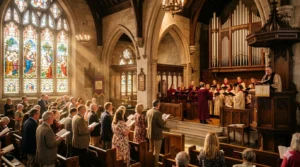
Because it works for congregations. It’s accessible enough for casual churchgoers and theologically rich enough to satisfy mature believers. The melody is singable. The message is universal. And the emotional journey of the song mirrors what many people sitting in a Sunday service are privately going through.
“Counting My Blessings is not just a song for Sunday mornings — it is a prayer for every ordinary moment when God’s goodness is quietly at work around you.”
FAQ — Your Top Questions About Counting My Blessings Answered
What is the meaning behind the song “Counting My Blessings”?
The song is about the spiritual practice of deliberate gratitude. It encourages listeners to actively look back at what God has done in their lives — especially in the details — and recognize that His goodness is too vast to fully measure. The core message is that even if you ran out of numbers, you’d still have more blessings to count.
Is Counting My Blessings a gospel song?
It is both. Seph Schlueter’s original version is a CCM worship song, while Pastor Mike Jr.’s version carries it into the gospel music tradition. The song’s message is universal enough to belong to both genres, which is why it resonates across different church cultures in the USA.
What is Seph Schlueter famous for?
Seph Schlueter is known as a Nashville-based Christian singer-songwriter who writes deeply personal, theologically grounded worship music. He gained wider recognition through “Counting My Blessings,” which became one of his most streamed and recognized tracks in the contemporary Christian music space.
Who originally sang Counting My Blessings?
The original version of “Counting My Blessings” was written and recorded by Seph Schlueter, co-written with Jordan Sapp and Jonathan Gamble, and released on July 28, 2023. Pastor Mike Jr. later released his own popular version that introduced the song to gospel audiences.
Conclusion:
“Counting My Blessings“ is more than a worship song. It is a spiritual practice set to music.
In a world where anxiety is at an all-time high and gratitude is often the last thing we remember to practice, Seph Schlueter wrote something that gently redirects the heart. It doesn’t demand you feel good. It simply invites you to look back — and remember.
The more you look into the details of your own life, the more evidence you find. Grace in the small things. Faithfulness in the hard seasons. Goodness running deeper than you noticed in the moment.
You don’t need a calculator. You just need a willing heart.
“Start counting your blessings today — not because life is perfect, but because God has been faithful in ways you have not yet fully seen.”