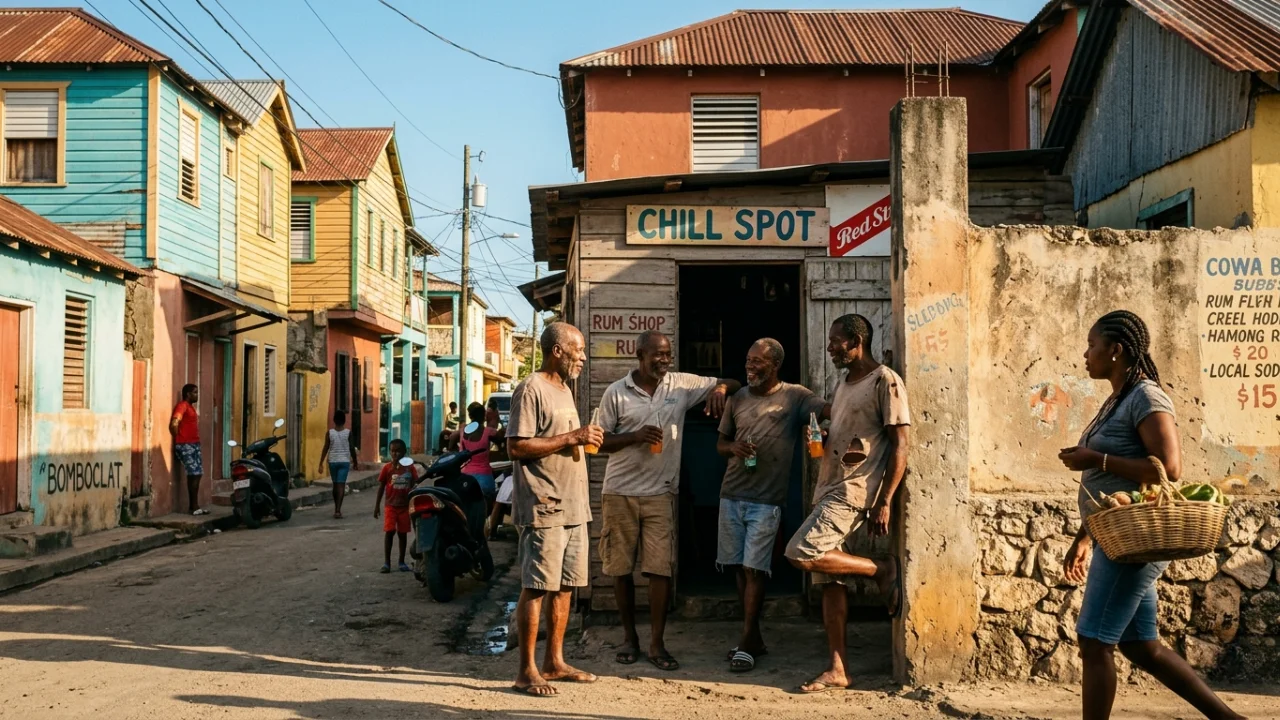
You’ve seen it in a meme. You’ve heard it in a song. You may have even typed it yourself without knowing what it actually means.
Bomboclat is one of those words that exploded onto the internet — raw, loud, and carrying way more history than most people realize. This guide breaks down the real bomboclat meaning, where it came from, how it spread globally, and why Americans keep searching for it.
What Does Bomboclat Mean? (The Real Definition)
Bomboclat (also spelled bumboclaat, bumbaclot, or bomboclaat) is a Jamaican Patois expletive. In everyday use, it works like the English f-word — versatile, emotionally charged, and context-dependent.
So what does bomboclat literally mean?
The word splits into two parts:
- Bumbo — a coarse Jamaican Patois term for female genitalia
- Claat — the Jamaican Patois word for cloth
Put together, the literal translation is roughly “menstrual cloth.” That’s the raw, unfiltered origin. It sounds shocking because it is — by design.
In Jamaican English, bomboclat carries the same weight as the f-word in American English. It expresses:
- Shock — “Bomboclat, I can’t believe that just happened!”
- Anger — “Dem bomboclat government brutalising de people!”
- Admiration or hype — “That performance was bomboclat amazing!”
- Frustration — “Wat in the bomboclat!!!”
The word functions as an adjective, noun, and interjection — all at once, depending on tone.
How Americans Use It Today
In the USA, most people first encountered bomboclat through memes, TikTok videos, and Twitter posts. For American audiences, it often appears as:
- A random, funny exclamation — like saying “What the heck?!”
- A meme caption on weird, bizarre, or shocking content
- A word that signals something is impressive or unbelievable
- Gen Alpha slang used online with zero awareness of its Jamaican roots
According to Merriam-Webster, bomboclat is now officially documented as Internet slang meaning “a nonsense term captioning images or videos found unusual,” and sometimes meaning “attractive or impressive.”
That shift from Jamaican curse word to American internet slang tells a bigger story about how language travels in the digital age.
Spelling Variations — Which One Is Correct?
There is no single correct spelling. Here are the most common versions:
| Spelling | Region/Context |
|---|---|
| Bomboclat | Most common online spelling |
| Bumboclaat | Traditional Jamaican Patois |
| Bumbaclot | Caribbean diaspora usage |
| Bomboclaat | Alternative internet spelling |
| Rassclaat | Related word, same claat family |
| Bloodclaat | Another strong Jamaican expletive |
All variations are used — the spelling depends on the speaker, region, and context.
Must Visit: Medusa Tattoo Meaning: Symbolism, Styles & What It Really Says About You
The True Origins of Bomboclat — Deeper Than You Think
Most articles stop at “it’s a Jamaican curse word.” But the real story goes much deeper — into history, language, and culture.
Jamaican Patois, African Roots, and Colonial History
Jamaican Patois (also called Jamaican Creole) is not broken English. It is a fully developed language that blends:
- English (from British colonial rule)
- West African languages (from enslaved peoples brought to Jamaica)
- Caribbean indigenous influences
Words like bomboclat did not appear by accident. During colonial times, enslaved and oppressed populations in Jamaica used language creatively — as a form of resistance, identity, and coded communication. Strong expletives became cultural tools, not just insults.
Bomboclat has been recorded in Jamaican English since at least the 1950s, according to Merriam-Webster — but linguists believe it was in active use well before that. Its roots are likely much older than any written record.
What Most Competitors Don’t Tell You — The Cultural Weight Behind the Word
Here is what gets left out of most bomboclat explainer articles:
Hygiene-based language has a long history as profanity across cultures. Because menstruation was historically taboo, words connected to it carried enormous social weight. In Jamaican Patois, claat (cloth) combined with body-related terms created some of the most loaded expressions in the language.
Bomboclat belongs to an entire claat-based word family in Jamaican Patois:
- Bloodclaat — literally “blood cloth”; used to express extreme anger or shock
- Rassclaat — another strong expletive with the same claat suffix
- Pussyclaat — variation used in some Caribbean dialects
All of these words share the same structural DNA. They are not random — they reflect a linguistic pattern rooted in taboo, resistance, and Jamaican social identity.
Dancehall and reggae music played a massive role in keeping these words alive and spreading them globally. Vybz Kartel, one of the most influential dancehall artists in history, has used bomboclat across multiple tracks. His music — and that of artists like Alkaline, Popcaan, and Tommy Lee Sparta — gave non-Jamaicans a front-row seat to authentic Patois expression.
Must Visit: Katz Meaning: A Comprehensive Exploration of Its Origins and Usage
Bomboclat on Social Media — From Jamaica to Viral Internet Slang
The word existed in Jamaica for decades. But one moment changed everything.
The 2019 Twitter Meme That Changed Everything
In September 2019, a Twitter user posted the word “bomboclaat” as a single-word caption to a random meme image. No explanation. No context. Just — bomboclaat.
The post went viral.
Millions of people engaged. Most had never heard the word before. A massive online conversation erupted — what does this mean? Where is it from? Is it even a real word?
At the same time, there was widespread confusion with “sco pu tu mana” — a nonsense internet phrase that had gone viral a few months earlier in April 2019, popularized by a Ghanaian musician. People mixed the two up, which actually amplified bomboclat’s spread. The confusion created more curiosity, more searches, and more memes.
That single viral moment in 2019 is arguably what launched bomboclat from a Jamaican street word into a global internet phenomenon. Merriam-Webster confirms this timeline.
Rob Ford’s 2014 Moment — The First Mainstream Western Spotlight
Five years before the viral meme, bomboclat got its first major mainstream western exposure.
In 2014, Rob Ford — then Mayor of Toronto, a city with one of the largest Caribbean diaspora communities in North America — used bomboclat in a public rant. It was controversial, widely covered, and introduced millions of non-Jamaicans to the word for the very first time.
Toronto’s large Jamaican-Canadian community had been using Patois expressions naturally for years. Ford’s use of the word — however inappropriate — showed just how deeply Jamaican language had embedded itself in Canadian urban culture.
TikTok, Instagram, Reddit, and Gen Alpha Slang
After 2019, bomboclat spread across every platform:
TikTok — Creators used it as a caption for shocking, funny, or jaw-dropping content. “Bomboclat Challenge” trends appeared. Dance videos, reaction content, and commentary clips all embraced it.
Twitter/X — Used as a reaction word. “She really said that? Bomboclat.” One-word tweets of just bomboclaat would get thousands of likes.
Instagram — Meme pages adopted it as a go-to caption for absurd content. “When your phone dies at 1% battery… bomboclat.”
Reddit — Users in communities like r/NoStupidQuestions actively searched for and discussed the word’s meaning, showing that curiosity — not fluency — was the dominant driver.
Merriam-Webster places bomboclat directly in the context of Generation Alpha’s “brain rot” slang — alongside words like gyatt, skibidi, and Fanum tax. These are all terms that went viral online, often detached from original meaning, and became generational language markers.
How To Use Bomboclat Correctly — Context, Tone, and Situation
Knowing the word is one thing. Knowing when and how to use it is another.
When It Is Acceptable vs. When It Crosses the Line
Online/Meme Context (Generally Acceptable):
- Using it as a reaction to something shocking or funny
- Posting it as a meme caption for bizarre or absurd content
- Using it in humor-based, casual digital conversations
Real-World/Formal Context (Often Inappropriate):
- Using it in public in Jamaica — it carries full curse-word weight
- Using it in professional, academic, or formal settings
- Using it around people from the Caribbean who may find it disrespectful when used without cultural understanding
Real sentence examples across emotional contexts:
- Shock: “Bomboclat! I just won $5,000!”
- Frustration: “My flight was delayed again — wat in the bomboclat!”
- Admiration: “That goal was bomboclat crazy!”
- Disbelief: “She actually said that? Bomboclat.”
Do’s and Don’ts for American Audiences Using Jamaican Slang
Do:
- Understand its origin before using it
- Use it in clearly humorous or meme-based contexts
- Acknowledge it as Jamaican Patois — not a made-up internet word
Don’t:
- Use it carelessly in conversations with Jamaican or Caribbean people
- Treat it as a “funny nonsense word” — it has real cultural weight
- Overuse it just because it is trending
Cultural appropriation vs. cultural appreciation is a real consideration here. Enjoying and understanding Jamaican Patois is appreciation. Using its most vulgar expressions without any awareness of their history edges toward appropriation.
Bomboclat in Jamaican Music and Pop Culture
This word did not go global by accident. Music carried it there.
Dancehall and Reggae — Where the Word Lives Loudly
Jamaican dancehall music is the primary vehicle through which Patois expressions reached the world. Bomboclat, along with other claat-family words, appears regularly in lyrics — used to express:
- Raw emotion and street authenticity
- Defiance and resistance against authority or hardship
- Hype and excitement in party and celebratory contexts
Vybz Kartel, widely regarded as one of the most influential dancehall artists of the 21st century, has used bomboclat across his catalog. His lyrical authenticity — and his enormous global fanbase — gave millions of non-Jamaican listeners direct exposure to the word in its natural emotional context.
Other major dancehall and reggae artists including Popcaan, Alkaline, and Spice have all contributed to the normalization of Patois expressions in global pop culture.
What Most Articles Miss — The Diaspora’s Critical Role
This is where most competitors stop short.
The global spread of bomboclat was not just about music or memes. It was fueled by the Jamaican and Caribbean diaspora living in major English-speaking cities:
- Toronto, Canada — Home to one of the largest Caribbean diaspora communities in the world. Jamaican Patois became embedded in Toronto’s hip-hop and urban culture long before it went viral online.
- London, UK — The UK Grime scene borrowed heavily from Jamaican Patois. Artists like Stormzy, Skepta, and Giggs incorporated Caribbean linguistic elements into British urban music. Bomboclat became common slang in UK urban communities years before the 2019 Twitter moment.
- New York and Miami, USA — Large Jamaican-American populations in both cities kept Patois alive in daily speech, music, and community culture.
The diaspora communities acted as cultural bridges — keeping the word authentic on one side, and introducing it to wider audiences on the other. Without them, the 2019 viral moment may never have landed the way it did.
FAQs
Is Bombaclat good or bad?
The honest answer: it depends entirely on context.
In Jamaica, bomboclat is a strong curse word — similar in weight to the f-word in American English. It is considered vulgar and inappropriate in formal or polite settings. However, Jamaicans also use it freely among friends and in casual conversation, just as Americans use strong language informally.
What Does Bloodclaat Mean in Jamaica?
Bloodclaat (sometimes spelled bloodclot) is another member of the Jamaican Patois claat word family.
Literally, it translates to “blood cloth” — again rooted in taboo body language. In Jamaican English, it functions as an intensifier and expletive, often expressing extreme anger, shock, or frustration.
What Does “Licky Licky” Mean in Jamaica?
“Licky licky” is a colorful Jamaican Patois expression that describes someone who is greedy, a freeloader, or an opportunistic flatterer — someone who only shows up when there is something to gain.
In everyday Jamaican usage, calling someone “licky licky” means they are always looking for a handout, always hungry for what others have, or constantly trying to get favors through flattery.
What Does “Clat” Mean in Bombaclat?
“Claat” is the Jamaican Patois word for cloth or fabric.
On its own, claat is a completely neutral word. But when combined with taboo terms — like bumbo (female genitalia), blood, or rass (backside) — it creates the powerful expletives that make up the claat word family.
Conclusion
Bomboclat is more than a meme word. It is a window into Jamaican culture, history, and the power of language to travel.
It started as a Jamaican expletive rooted in colonial-era taboo. It was carried globally by dancehall music, diaspora communities, and artists like Vybz Kartel. It went viral in 2019 on Twitter, got picked up by TikTok and Gen Alpha, and landed in Merriam-Webster’s slang dictionary.
Knowing what bomboclat actually means — and where it truly comes from — lets you engage with it thoughtfully, not just blindly follow a trend.
Language is culture. Use it with respect.